
Data and Business Systems
Archive and delete data with an explicit policy
Archive and delete are different business decisions. Define what leaves active work, what remains retrievable, which dependencies block removal, and how copies and restores follow the same policy before adding a bulk cleanup button.
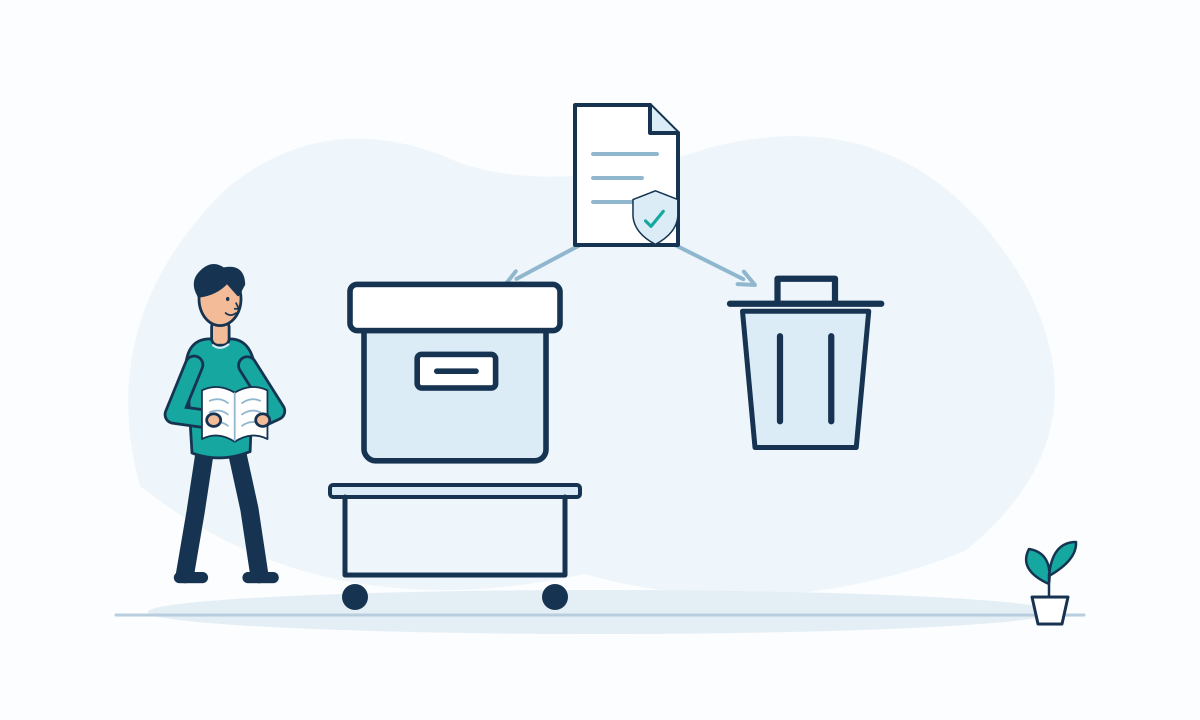
Old records can clutter everyday work, but deleting them without a policy can break explanations and relationships. Archiving usually changes how records participate in active operations. Deletion removes data from a defined scope. Neither term tells operators what happens to exports, attachments, search indexes, or restored backups. Write that behavior explicitly.
Define lifecycle states and policy owners
Separate inactive, archived, pending deletion, and deleted when the distinctions affect real decisions. Describe which actions remain possible in each state. An archived asset might stay available for historical service requests while disappearing from new assignment menus. That is a different operation from removing its history.
For each record class, name a policy owner and the event that starts retention. Use the appropriate legal and business review to determine requirements. Do not borrow a retention period from another dataset just because both live in the same application. This article recommends a design process, not a legal retention schedule.
Trace copies and dependencies
List linked transactions, attachments, derived indexes, exported files, and backups within the policy scope. Decide which references must remain meaningful after removal. PostgreSQL foreign keys can enforce relationships and support specified behavior when referenced rows are deleted.[1] Choose that behavior deliberately rather than enabling cascading removal for convenience.
OWASP notes that event logs and their copies must follow required retention periods, including limits on keeping them too long.[3] A business record and its audit history may need different treatment. Explain how permitted history survives without retaining unnecessary sensitive values from the deleted record.
Hypothetical example: retiring an inspection form
A hypothetical property team archives a superseded inspection template. Staff cannot use it for new inspections, but authorized reviewers can still understand completed inspections that reference its questions. Later, a separate policy-controlled task removes eligible attachments after checks for outstanding restrictions.
Before deletion, the task produces a reviewable list and names the approving owner. A failed removal remains visible for retry. This workflow preserves useful context, but it also requires careful separation between template content, completed responses, and attachments. One global delete flag would not express those differences.
Treat recovery as part of deletion design
Recommend a staged process for consequential cleanup: select candidates, verify eligibility, obtain required approval, execute, and record the outcome. Define what a cancellation or retry means. A partial failure should not produce a success message that hides remaining copies or broken references.
Backups create an important limitation. A restore can reintroduce records removed from active storage. Document how the restore procedure reapplies valid deletion decisions before the restored system resumes normal use. Avoid claims of complete erasure unless the team can verify the entire stated scope.
- Assign a policy owner and retention trigger per record class.
- Separate archive visibility from physical removal.
- Check dependencies and explicit deletion restrictions.
- Include attachments, indexes, exports, and restore procedures.
- Record partial failures and verify the final removal scope.
