
APIs and Integration
Trace a business transaction across connected systems
A transaction can cross several services while each dashboard reports local success. Connect technical traces with durable business identifiers so support can locate delays without confusing a request with a completed outcome.
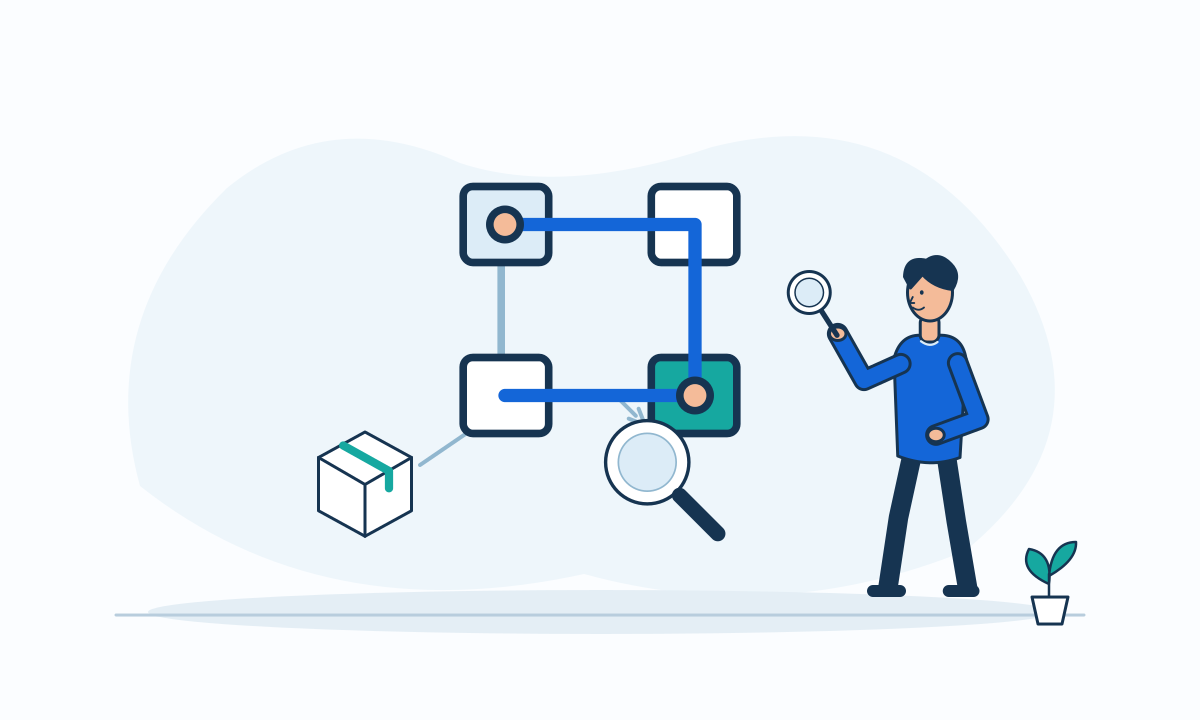
A customer asks where a return request stopped. The portal accepted it, the warehouse service queued it, and another system has no visible update. Each team can find its own logs, but nobody can explain the complete transaction. Design the investigation path alongside the integration path.
Distinguish traces from business records
OpenTelemetry explains that context propagation correlates signals across services and allows traces to capture causal relationships across process and network boundaries.[8] A trace connects related execution steps. It is not a durable business ledger or proof that every intended action completed.
Recommend a stable business reference for the transaction, separate from trace identifiers. A return can span several requests, worker attempts, and later manual actions. Those activities may produce different traces. The business reference should connect them through controlled records without depending on a particular telemetry retention window or a sampled trace being available.
Carry context through the actual path
Instrument incoming requests, outbound calls, and worker execution where the tooling supports it. Propagate context using supported mechanisms rather than embedding arbitrary internal fields in public payloads. For queued work, record the business reference and use the tracing library’s supported context or link mechanism.
Define useful steps around business boundaries: accepted, queued, dispatched, acknowledged, and reconciled. Measure waiting separately from execution where possible. A fast worker span can hide a long queue delay if you observe only active processing. Confirm propagation with a real cross-service test instead of assuming that installing an agent connects every boundary automatically.
Keep diagnostic context safe
OpenTelemetry warns against placing credentials, API keys, or personal information in baggage because it can cross service boundaries.[8] Baggage means propagated key-value context. Limit its fields deliberately. A correlation identifier is also not authorization to view the transaction it identifies.
- Keep business references, trace identifiers, and retry identities distinct.
- Check context across HTTP calls, queues, scheduled jobs, and recovery workers.
- Define retention, sampling limits, access controls, and sensitive-field redaction.
- Alert on missing progress and queue age, not only error spans.
Hypothetical example: a product return
Hypothetical example: a retailer assigns one return reference at submission. Support can use that reference to see the warehouse acceptance, a delayed refund task, and the associated technical traces. The refund provider response is uncertain, so the record shows reconciliation pending rather than completed.
This view requires agreed status meanings and instrumentation maintenance. Some provider internals remain invisible, so the team records the last confirmed boundary instead of inventing a complete trace. Start with one frequent support question and verify that an authorized operator can answer it from the available evidence without reading private payloads.
