Project Delivery
Start a pilot rollout with explicit stop conditions
A pilot rollout needs a reason to stop as well as a plan to expand. Define the cohort, observation window, user-impact signals, and recovery authority before exposing a small group to changed behavior.
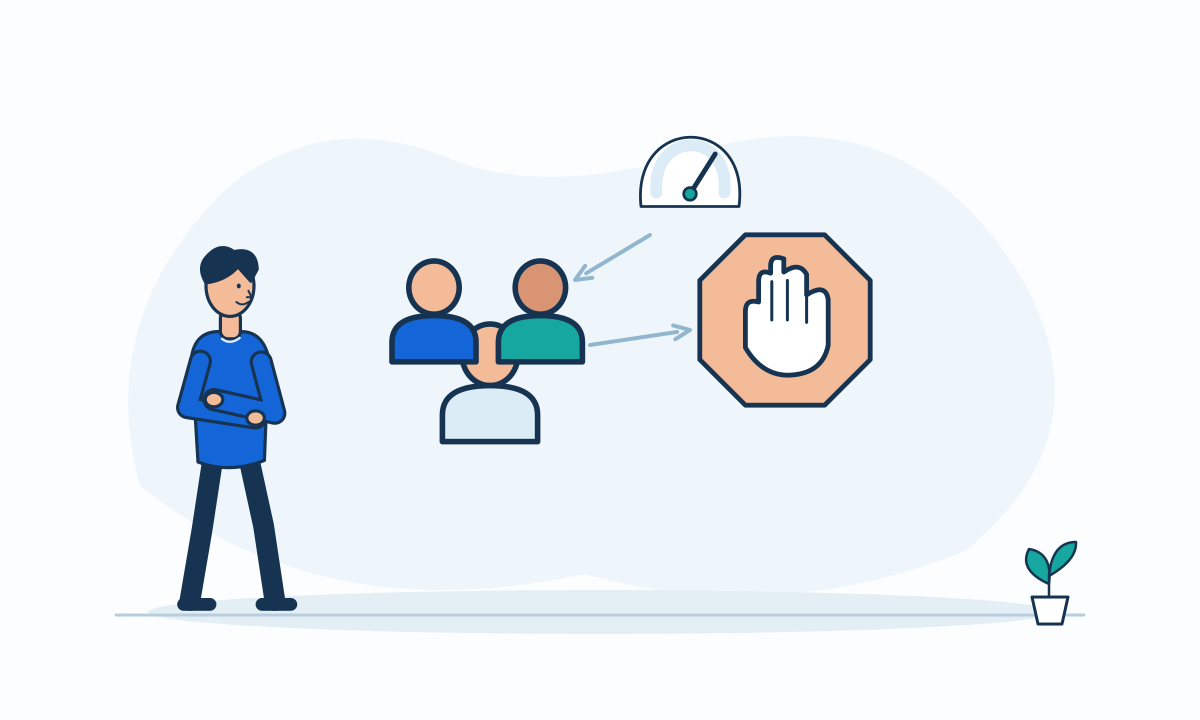
A pilot rollout limits who receives a change, but limited exposure alone does not make the release well controlled. The team needs to know what it wants to learn, which signals matter, and when it must pause. Decide those conditions before the results create pressure to continue. Treat expansion as a separate decision, not the automatic next step after a quiet launch.
Define a pilot that can answer a question
Choose a cohort that can exercise the intended workflow and receive support. Document how membership is controlled and how nonparticipants remain unaffected. A convenient internal group may miss the language, device, or permission differences that matter to the wider audience.
Google’s SRE workbook defines canarying as a partial, time-limited deployment followed by evaluation to decide whether rollout should continue.[6] A customer pilot can involve additional training and feedback, so it is not identical to a technical canary. Our recommendation is to borrow the explicit evaluation decision rather than assume a small group proves general readiness.
Agree on stop and hold conditions
State the user-impact signals, observation period, and person authorized to pause the pilot. Separate a stop condition that requires containment from a hold condition that prevents expansion while evidence remains incomplete. Lack of activity is not evidence of success when the pilot users did not attempt the task.
Prepare these controls before enabling access.
- Name the learning question and the eligible pilot cohort.
- Define observable stop conditions tied to user harm or data integrity.
- Identify who can pause access and who communicates with participants.
- Test recovery steps, including treatment of data already changed.
- State what evidence and exposure are required before expansion.
Hypothetical example: rescheduling appointments
In a hypothetical service portal, selected customers try self-service appointment changes. The pilot stops if a confirmed slot becomes double-booked or a changed appointment disappears from the operator queue. It holds expansion if too few users complete a reschedule to evaluate the workflow.
The team prepares a switch to disable new self-service changes and a process for reconciling appointments already modified. Turning off the feature does not automatically restore prior bookings. Support staff receive participant instructions and an escalation contact, so containment does not depend on locating the original developer.
Expand only after interpreting the evidence
Compare observed behavior with the planned success and stop conditions. Record missing coverage, such as users who rely on assistive technology or unusually complex appointments. Ask whether the next cohort introduces risks the first group could not reveal.
A pilot creates support and monitoring work, and some failures appear only at larger scale. Do not present a successful small rollout as a guarantee. End the pilot with an explicit decision to expand, revise, or stop. Before the next release, rehearse one stop scenario and confirm that the authorized person can actually perform the recovery.