
Applied AI
Protect customer information during AI provider integration
Protecting customer information requires more than choosing a model endpoint. Map prompts, retrieved context, logs, and support access, then verify the provider settings and application controls that govern each copy of the data.
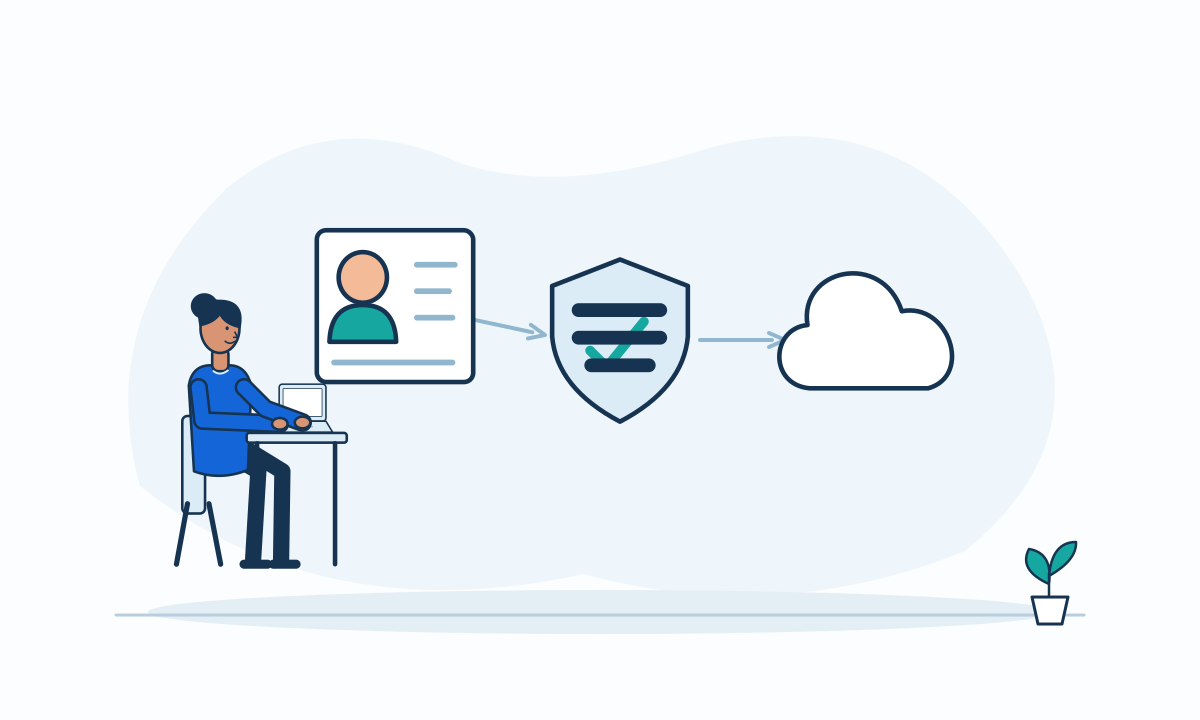
A customer support assistant may need a short issue description, not the customer’s entire account history. Begin provider integration by deciding what information the task actually requires. Then examine every place that information can travel or remain. A privacy statement cannot substitute for understanding the application’s actual requests and stored records.
Draw the complete data path
List the information in user input, retrieved passages, model responses, operational logs, analytics, and support exports. Identify which components receive each item and who can access it. Include error paths because a failed request can still create a diagnostic record. Start with synthetic records rather than real customer conversations.
OWASP identifies personal information, financial details, confidential business data, and security credentials among sensitive information in AI application contexts.[5] Use that inventory as a starting point, then ask the business owner which fields are necessary. Exclude irrelevant fields before assembling a request, not only after the response returns.
Verify the specific service arrangement
Ask for the terms and configuration that apply to the exact product, account, and feature being proposed. Review retention, training use, processing locations, subcontracted services, support access, and deletion procedures. Treat these as questions requiring provider evidence, not assumptions that all services from one vendor behave identically.
Record what your application stores separately from what the provider stores. Disabling one log does not demonstrate that every other copy is removed. Where requirements are unclear, involve the organization’s privacy and security owners before sending customer records. This article offers integration questions, not a determination of legal compliance.
Test application-side boundaries
OWASP recommends least-privilege access and warns that system-prompt restrictions may be bypassed.[5] Do not rely on instructions to the model as the only barrier between customers’ information. Enforce access scope before retrieval and restrict who can inspect stored responses.
- Send only fields needed for the selected task and review sample outbound payloads.
- Test that one customer or user cannot retrieve another’s restricted material.
- Keep credentials and unnecessary identifiers out of prompts and diagnostic logs.
- Set access and retention rules for transcripts, exports, and error records.
- Verify deletion behavior across the copies your team controls and document provider responsibilities.
Hypothetical example: a support summary
A hypothetical subscription business wants AI-generated summaries for service staff. The proposed request initially includes billing history and internal notes unrelated to the current issue. The integration team replaces that payload with the issue text, relevant product details, and a task reference without unnecessary identifiers.
Reviewers inspect test requests and failure logs to confirm that excluded fields remain absent. Staff access to summaries follows the existing support role. Do not assume that removing identifiers establishes anonymity. Reviewers still inspect the remaining issue text for details that identify or expose the customer.
Choose the boundary before scaling
Less context can reduce answer usefulness, while more context increases the information exposed to each component. Evaluate that tradeoff with representative tasks. If the required controls cannot be verified, narrow the feature, keep the data outside the integration, or pause the use case rather than treating uncertainty as approval.
