Data and Business Systems
Preserve business meaning when deduplicating records
Duplicate detection finds candidates, not proof that records mean the same thing. Define entity boundaries, preserve dependent work, and choose a survivorship rule before merging similar customer, supplier, location, or asset records.
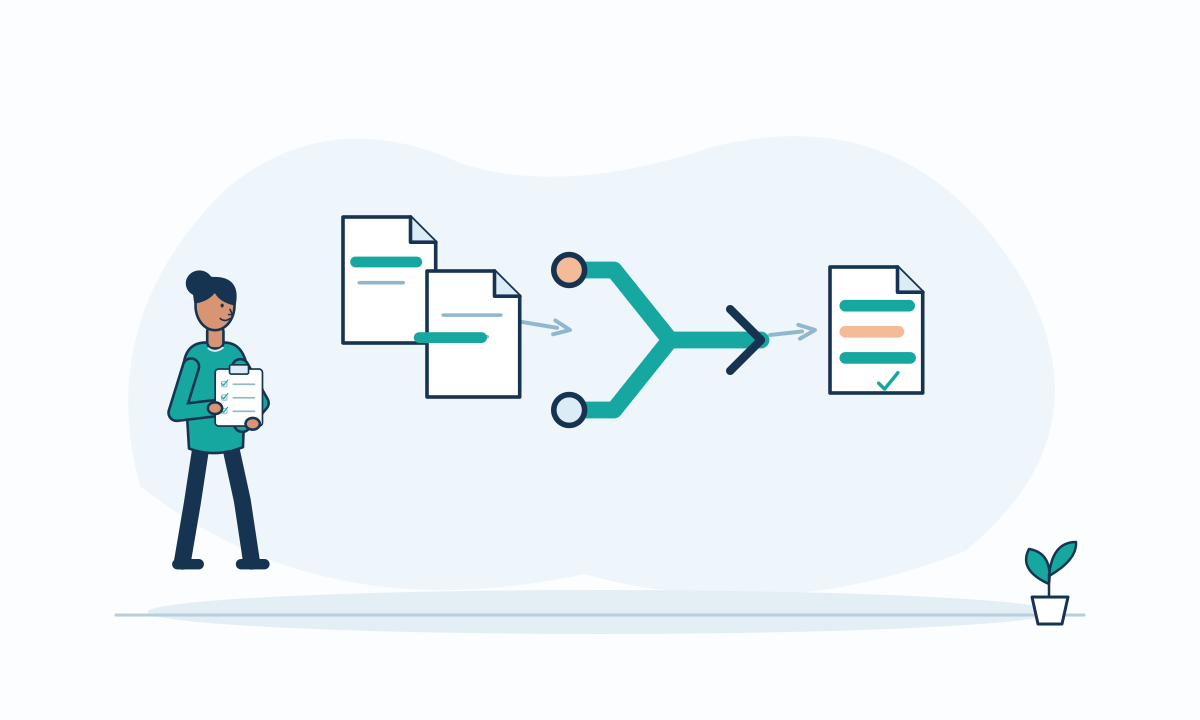
Two records share a name and address. They may be duplicates, separate branches, or distinct organizations that use the same office. Deduplication must preserve the business meaning behind the rows. A shorter list is not necessarily a better list if a merge erases relationships that operators need.
Decide what counts as one entity
Write an identity rule before choosing a matching algorithm. A customer account, delivery location, contact person, and legal organization are different entities. Decide whether the system intentionally keeps them separate. A shared email address may help find a candidate pair but should not automatically establish that both records represent one entity.
Choose review categories such as confirmed duplicate, related but distinct, and uncertain. Keep uncertain cases visible instead of forcing a binary decision. Make it possible to record why two similar entries must remain separate so the same pair does not repeatedly return to the review queue.
Define what survives the merge
A survivorship rule selects which values remain and why. Prefer approved ownership and evidence over a blanket newest-record rule. Distinguish a current value from historical context. Two different telephone numbers may both remain useful when each belongs to a different contact role.
PostgreSQL unique constraints restrict configured combinations of values, while foreign keys preserve references to related rows.[1] These controls support structural consistency. They do not determine whether two business identities should merge. Before consolidation, identify all dependent requests, documents, permissions, and integration mappings that need a deliberate destination.
Hypothetical example: similar supplier entries
A hypothetical procurement team finds two supplier entries with the same trading name. One handles equipment purchases and another represents a separately registered service organization. Reviewers mark them related but distinct and keep their approval routes separate. The matching screen records the reason.
A different pair represents the same supplier entered twice. Reviewers choose the authoritative contact values, redirect open requests, and preserve old identifiers as aliases. They inspect dependent records before acceptance. This requires more effort than deleting the second row, but it retains a traceable business relationship.
Control reversibility and future duplicates
Recommend a preview that shows changed references and fields before a reviewer commits. Keep a merge record with the source identifiers, chosen survivor, and justification. Define whether reversal is possible and what new activity would make a reversal require manual repair. Do not promise a simple undo for every merge.
Prevent recurrence at the point where staff create records. Offer candidate matches with enough context to distinguish legitimate entities. Excessively aggressive blocking can stop valid work, while weak suggestions may go unnoticed. Adjust the threshold using reviewed examples rather than maximizing the number of automatic merges. Ask reviewers to check both the survivor and a sample of redirected work before closing the merge task.
- Define the entity boundary and identity evidence.
- Separate duplicate, related, and uncertain candidates.
- Choose field-specific survivorship rules.
- Preview dependent references and permission changes.
- Retain aliases, justification, and a realistic reversal plan.