
Reliability and Operations
Create alerts with an owner and a response
An alert deserves attention only when someone can make a useful decision. Connect each notification to customer impact, a responsible role, an escalation path, and a response that can be rehearsed.
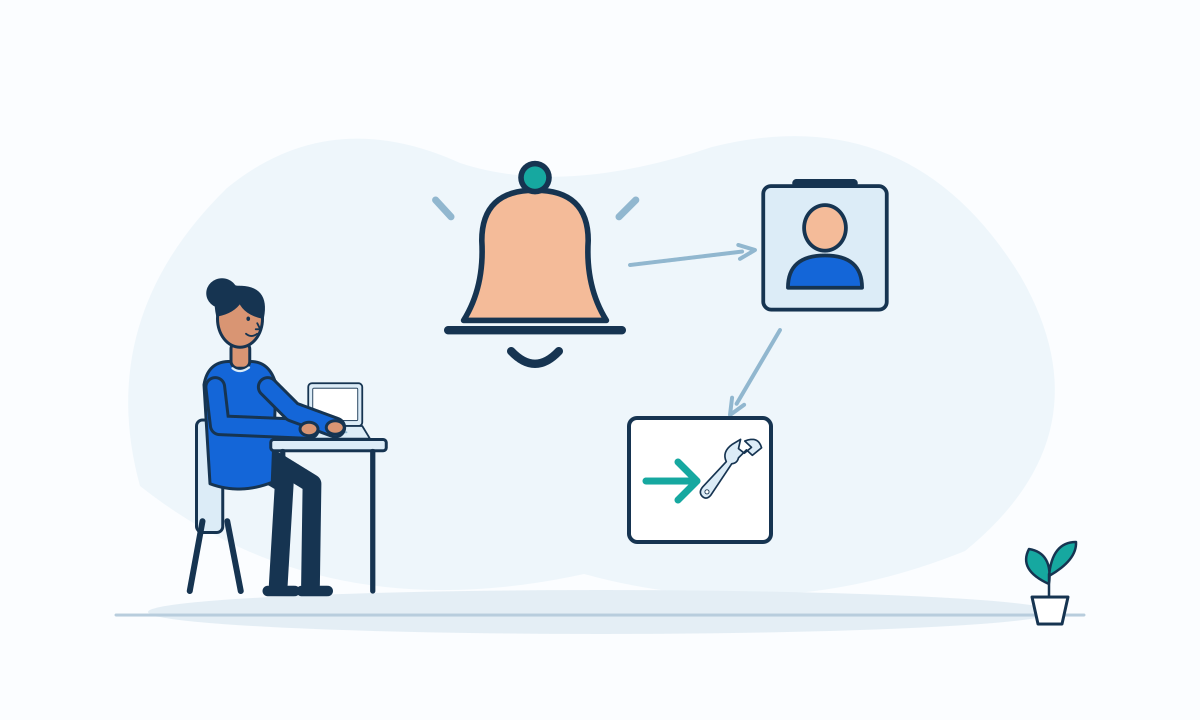
A notification is not a response plan. When every unusual graph creates an interruption, staff must decide what matters while the incident unfolds. Before adding another alert, define the decision it should trigger. An alert that cannot identify a responsible role and a useful next step may belong in a review queue rather than an urgent channel.
Begin with urgency and impact
Google’s monitoring guidance asks whether an alert detects an urgent, actionable, user-visible condition and whether someone can act on it.[2] Use those questions as a design review, not as a reason to ignore internal risk. Some early warnings deserve attention before users fail, but their urgency and response must still be explicit.
Separate immediate interruptions from issues that can wait for planned work. A slowly growing storage forecast and a failed checkout journey need different handling. State the expected response window as a team policy, not an implied promise that every issue will be resolved within that time.
Give ownership an operational meaning
Name a staffed role or rotation rather than one person’s informal contact details. Identify the backup route when the first responder cannot acknowledge. The responder should know which service boundary they own and when another team must join.
Include the observed condition, affected function, evidence link, and a short first decision in the notification. Avoid exposing secret values or customer records. Provide enough context to decide whether to open an incident, without turning a message into a full diagnostic archive.
Aggressive suppression can conceal a second failure, while excessive notifications can consume attention. Review groups of related alerts together and explain which independent conditions remain visible. Do not remove a rule solely because it fires frequently.
After an incident, ask which notification changed a decision and which added no useful information. Repair ownership gaps before tuning thresholds. The aim is not the smallest possible alert count. It is a notification set that supports deliberate, timely human action.
Hypothetical example: an export backlog
In this hypothetical example, a reporting service alerts whenever a queue contains work. Overnight exports make that signal noisy. The team instead evaluates whether the oldest eligible export approaches its agreed delivery boundary.
The responsible role checks processing progress and communicates affected reports before considering intervention. An unusual but healthy batch stays on a dashboard. This example demonstrates alert design, not a universal threshold or evidence of a specific reliability improvement.
Review the complete notification path
Test delivery and decision quality in a controlled exercise. A rule that evaluates correctly still needs a usable route to the responder.
- Identify the customer function or explicit operational risk.
- Name the primary responder and backup escalation role.
- Include the evidence needed for the first decision.
- State when to declare an incident or request help.
- Check duplicate suppression and notification recovery behavior.
