Product Discovery
Interview users without steering their answers
User interviews can produce confident but misleading answers when questions contain the preferred solution. Use recent events, neutral follow-up questions, and separate evidence notes to learn what people actually need.
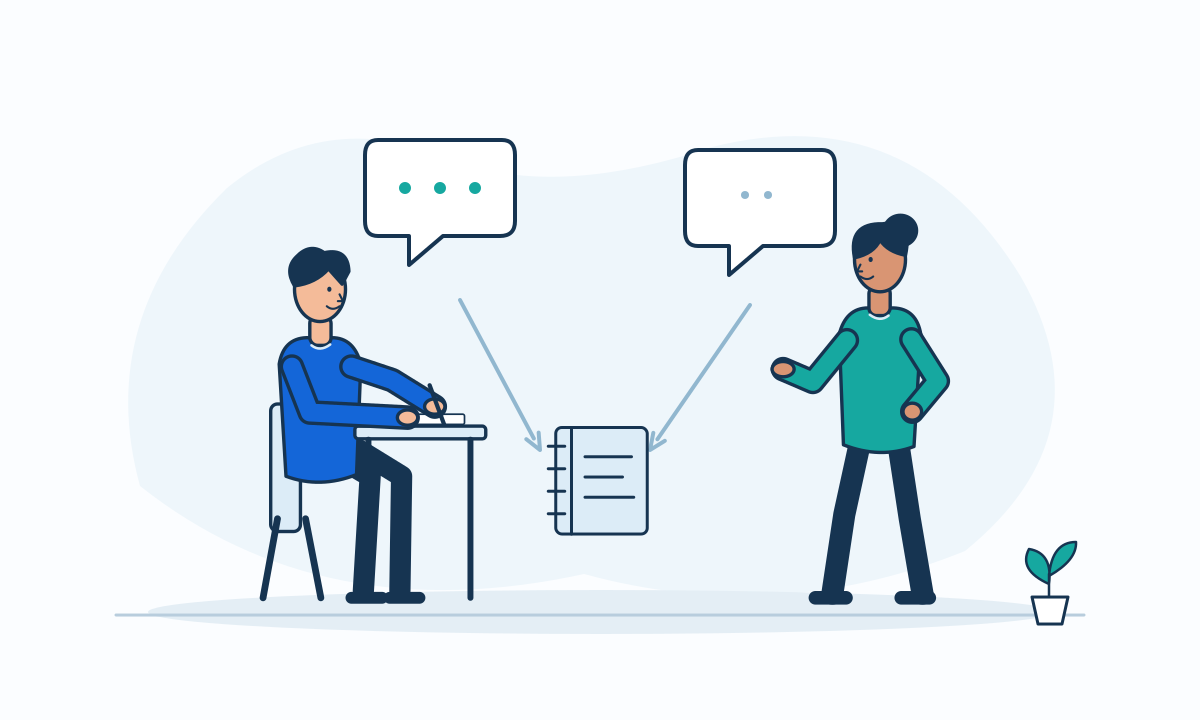
A stakeholder may ask a researcher to confirm that customers need a dashboard. That request already contains a preferred answer. The interview should instead uncover how customers monitor work today, where uncertainty occurs, and what they do when information is missing. Approval of an idea is not the same as evidence of need.
Recruit around behavior, not enthusiasm
Invite people who perform the relevant task, including those who avoid the current tool or need help. Record the circumstances that matter, such as frequency, role, and working environment. Do not recruit only friendly customers who already support the proposal.
GOV.UK recommends current or likely users and a discussion guide with starter and follow-up questions.[2] Prepare the guide around research questions. Pilot it with a colleague to find confusing language, then adjust it before customer sessions.
Replace predictions with recent events
Ask what happened the last time a delivery date changed, not whether automatic alerts would be useful. Follow the sequence: what triggered the task, what information was available, who acted, and how the person knew it was complete.
The official interview guidance calls for open, neutral questions and stories about real examples.[2] Let silence give the participant time to think. If an answer is unclear, ask for clarification without supplying the explanation you hope to hear.
Hypothetical example: supplier updates
A hypothetical procurement team considers a supplier dashboard. An interviewer asks a buyer to describe the last delayed order. The buyer explains that the delivery date was visible, but nobody knew whether a substitute item was acceptable.
The observation changes the research question from better visibility to authority for substitutions. It does not prove that every buyer shares the problem. The team checks other roles and reviews suitable request records before deciding whether a new interface deserves testing.
Use a neutral interview checklist
Before each session, check the conditions that can distort the account. These checks are recommendations for practical research, not a claim that bias can disappear.
- Explain the session purpose and obtain informed participation consent.
- Remove questions that praise the proposed feature or imply blame.
- Ask for a recent event and a concrete artifact when appropriate.
- Keep quotations, observations, and researcher interpretations in separate notes.
- Ask about contradictory experiences before closing the session.
Decide what the evidence can support
Interviews provide detailed accounts, but memory and the recruitment sample limit their reach. A participant’s prediction about future use is not a purchase commitment. Do not convert a few interviews into a market percentage.
Summarize the pattern, its exceptions, and the unanswered questions. For consequential decisions, combine the account with observation or a task test. End with the next uncertainty to resolve rather than a vote on the preferred product.