
Applied AI
Prepare document quality before adding semantic search
Semantic search cannot settle disagreements between outdated procedures. Prepare a small, accountable document collection first, then test whether retrieved passages preserve the conditions employees need to answer real business questions.
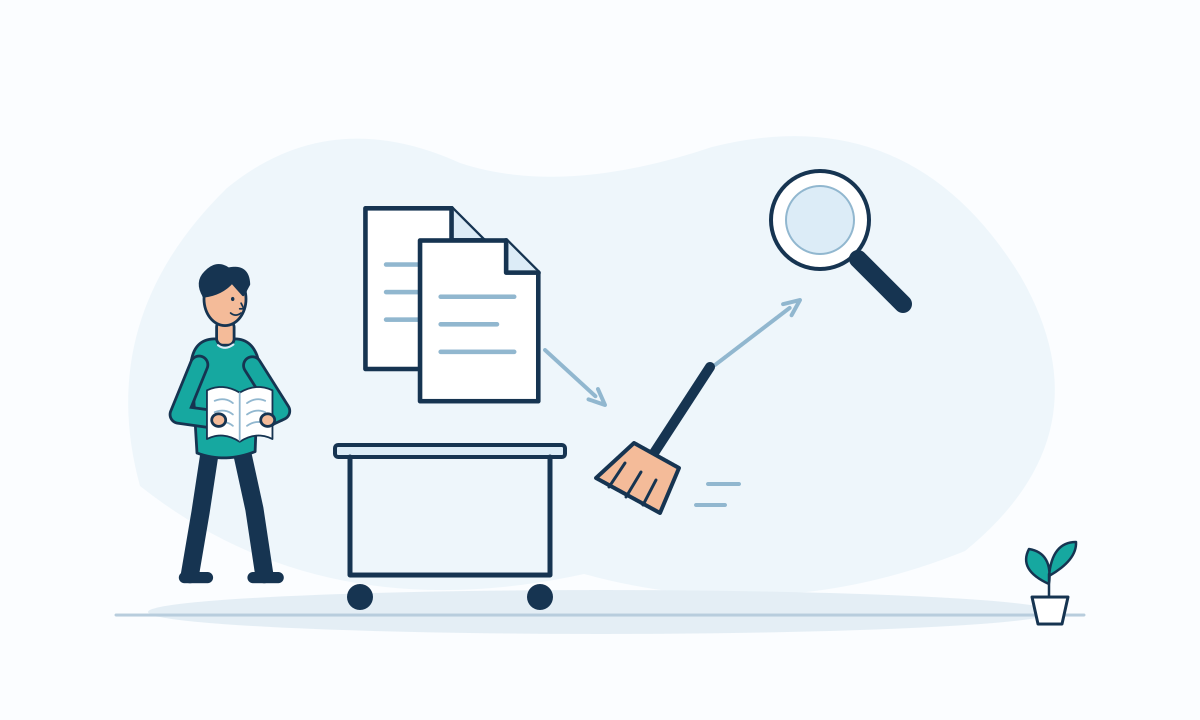
A search pilot can retrieve a convincing paragraph and still give employees the wrong instruction. Before selecting a model, decide which documents deserve to become answer sources. Treat document preparation as a business ownership task, not merely a file conversion exercise. Start with one workflow where an incorrect instruction has a recognizable consequence.
Choose the authoritative collection
Ask a process owner to identify the approved procedure, its exceptions, and the documents it replaces. Put unresolved conflicts in a separate review queue. Do not let the search system decide which of two contradictory policies has authority. Record an owner and review trigger for each included document.
Keep working notes available elsewhere if employees need them, but distinguish them from approved instructions. This recommendation deliberately trades collection size for a clearer answer boundary. A smaller collection can leave more questions unanswered. That limitation should appear in the interface rather than disappear behind plausible prose.
Preserve meaning when text is divided
Microsoft describes fixed, structure-based, and semantic approaches to dividing documents into smaller passages.[1] Its guidance notes that titles can help retain context in passages from a document’s middle.[1] Do not copy a default passage size without testing your own material.
Inspect whether a passage retains the subject, eligibility conditions, units, and exceptions needed for an answer. Keep table headers associated with rows. If the exception appears on another page, connect it explicitly or keep the related text together. These are proposed preparation rules, not evidence of a measured accuracy improvement.
Check the collection before indexing
Use this acceptance checklist with both a document owner and the person responsible for search configuration. Record failures against individual documents so the owner can correct them.
- Identify one authoritative version for each procedure and mark superseded copies.
- Verify that extracted text includes table labels, negative conditions, and footnotes.
- Attach document ownership, access scope, and a stable source reference.
- Read sample passages without their surrounding pages to test whether essential context survives.
Hypothetical example: a returns desk
A hypothetical retailer prepares return instructions for store staff. One file describes ordinary purchases, while another changes the rules for clearance goods. The team discovers that the clearance exception sits below a table that the text extractor omitted.
Instead of tuning similarity settings, the owner repairs the extracted table and labels the applicable product category. Test questions then ask about ordinary and clearance purchases separately. Readiness depends on retrieving the correct exception, not simply finding a passage that mentions returns.
Make readiness a visible decision
Release the collection only after owners resolve critical contradictions and reviewers can trace sample answers to intact passages. Keep a record of excluded documents and unanswered questions. That record tells a buyer whether the next investment belongs in content repair, broader coverage, or search technology.
