Security and Privacy
Keep sensitive fields out of logs and error messages
Useful diagnostics do not require copying customer payloads into every log. Define safe event fields, inspect error responses, and test the full monitoring route so troubleshooting does not create another uncontrolled store of sensitive data.
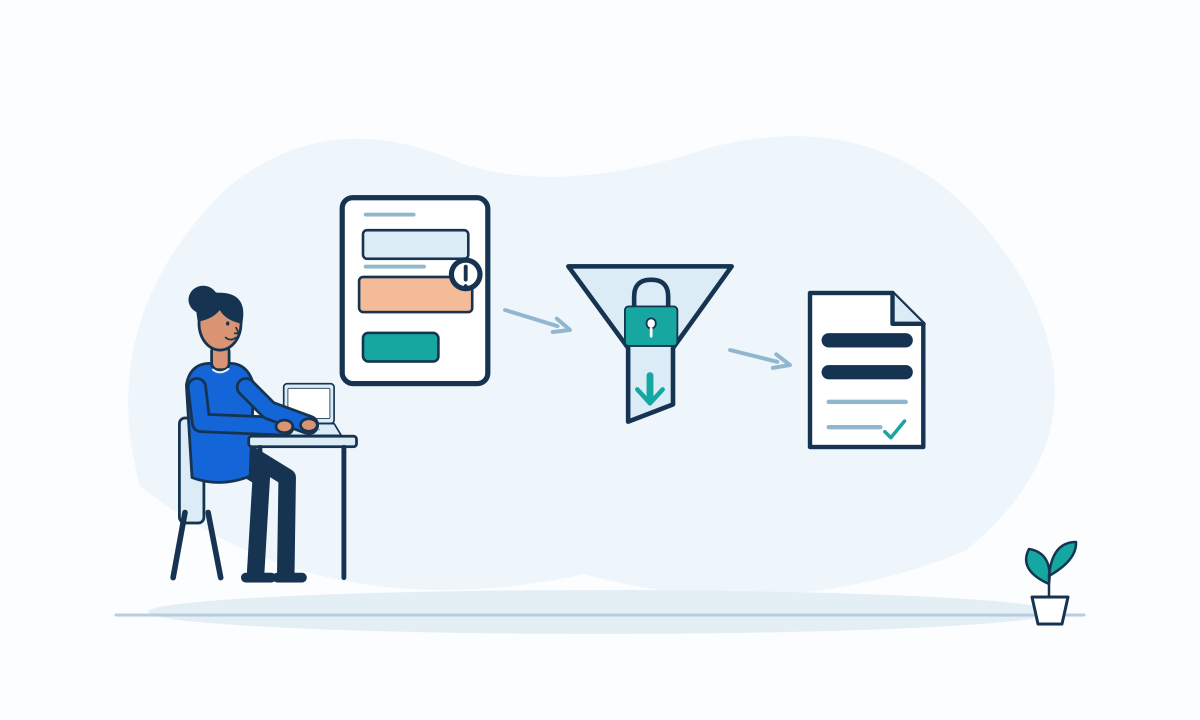
Logs help a team explain failed payments, denied access, and interrupted integrations. They can also become an unintended copy of customer records. Before accepting a monitoring setup, ask what each event contains, where it travels, and who can read it. Include error messages in the same discussion.
Choose fields by diagnostic purpose
OWASP lists passwords, access tokens, session identifiers, and sensitive personal data among information that should usually not be logged directly.[5] Begin with an event schema, a documented list of permitted fields, rather than a habit of recording complete request bodies.
Recommend an event name, outcome, component, and an opaque correlation identifier that connects related activity. Add a business reference only when it is needed and access is appropriate. A correlation identifier is still operational data with a purpose and retention limit. It is not an excuse to collect everything around it.
Apply the rule beyond application code
Ask the team to inspect gateways, exception handlers, monitoring agents, and support exports. A carefully written application logger is only one stop in the route. Review sampled events after forwarding, not only a developer’s local console.
OWASP recommends validating and sanitizing event data and testing that logging failures do not cause information leakage.[5] Translate this into acceptance cases for rejected inputs, downstream failures, and unavailable collectors. Recommend a customer-facing error that explains the next action and supplies a reference without echoing submitted secrets.
Hypothetical example: a payment handoff
In a hypothetical subscription checkout, an external payment handoff fails. The customer sees a neutral failure explanation and a support reference. The operational event records the handoff stage and an approved provider error category, not payment details or authorization headers.
During review, the team finds that a monitoring agent still captures the full failing request. They change the collection policy and repeat the test at the destination. This hypothetical finding demonstrates why redaction must cover the complete route, not just one logging statement.
Inspect evidence without real secrets
Use distinctive synthetic values in authorized tests. Search for those values across the expected destinations and customer responses, then verify that useful event context remains.
- Define permitted fields for authentication, payment, and support events.
- Exclude secrets before routine forwarding and third-party collection.
- Check stack traces and validation messages for submitted sensitive values.
- Restrict log access and define retention for each destination.
- Retest after debug settings or monitoring integrations change.
Preserve diagnostic value deliberately
Removing too much context can make investigation difficult. Keeping everything creates a different risk. Agree the minimum evidence needed for common incidents, then document a controlled route for exceptional diagnostics. Do not treat masking as deletion or assume that a hashed identifier is anonymous. Approve logging on the evidence it preserves and the sensitive material it excludes.