
Project Delivery
Prioritize defects by user impact and reproducibility
Defect priority should reflect user harm, exposure, and recovery options without ignoring evidence quality. Separate impact from reproducibility so intermittent but serious problems receive investigation instead of disappearing behind easy fixes.
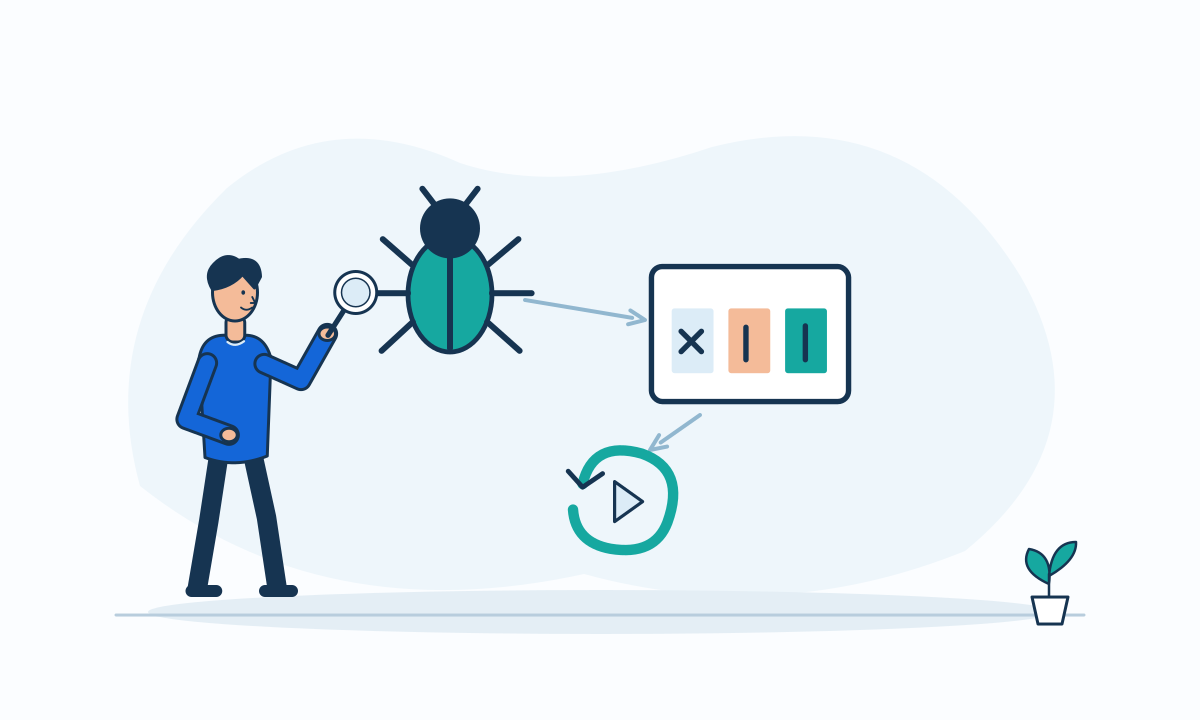
A defect that is easy to demonstrate is not always the most important defect to fix. A rare failure can interrupt a critical task, while a persistent visual issue may have a simple workaround. Triage needs two separate judgments: what happens to users, and how confidently the team understands the failure. Combining those judgments into one vague severity label can hide both urgency and uncertainty.
Describe impact before choosing a label
Identify the affected task, exposed users, and consequence of failure. Ask whether work can continue, whether data needs correction, and whether a safe workaround exists. Record observed exposure separately from estimates. Do not turn one report into a claim that every user is affected.
Use local severity definitions to describe harm, then set priority as the order of work. A low-frequency defect may deserve immediate investigation when its potential consequence is serious. A broad but cosmetic issue may wait if the team can explain the tradeoff. These are recommended decision rules, not universal severity categories.
Make the evidence reproducible when possible
Mozilla’s bug-writing guidance calls for clear reproduction steps and separates observed facts from speculation.[5] Apply that discipline to the tested version, starting state, exact actions, expected result, and actual result. Attach only appropriately sanitized logs and examples.
Use this triage checklist before assigning the next action.
- Name the blocked task and the observable user consequence.
- Record known exposure and uncertainty about wider impact.
- Capture version, environment, starting state, and reproduction attempts.
- Assess the safety and effort of any proposed workaround.
- Assign repair, investigation, or monitored deferral with an owner.
Hypothetical example: duplicate pickup requests
In a hypothetical collection scheduler, a user reports two pickup requests after retrying a slow submission. The team cannot reproduce the failure consistently. A separate alignment defect appears every time on the confirmation page. Fixing the alignment first merely because it is reproducible would confuse evidence quality with user impact.
The triage owner assigns an investigation of duplicate requests and asks support to preserve sanitized examples with the affected version and sequence. The team checks whether operations can identify duplicates before dispatch. The visual defect remains recorded, but its priority reflects the less disruptive consequence.
Revisit priority when the evidence changes
An investigation should produce a clearer condition, a containment option, or an explicit statement of remaining uncertainty. Set a review trigger rather than leaving “cannot reproduce” as a permanent destination. Repeated reports, a failed workaround, or new exposure should reopen the decision.
Triage consumes time, and elaborate scoring can create false precision. Keep categories understandable and record the reasoning behind consequential choices. Review the highest-impact unresolved issue at the next delivery discussion. Ask whether the current evidence supports repair, further investigation, or a consciously accepted delay, and name who owns that choice.
